There is a day in the Chinese autumn when the entire culture turns its face upward — toward mountains, toward height, toward the thinning air where the world falls away and the horizon widens. The Double Ninth Festival (重阳节, Chóngyáng Jié), falling on the ninth day of the ninth lunar month, is a celebration of ascent: climbing peaks, drinking chrysanthemum wine, gazing at the last warm colors before winter strips the land bare. But it is also, beneath its outward vigor, a meditation on aging, on the passage of years, and on the quiet dignity of growing old in a world that worships youth. It is, in the Chinese calendar, the festival that looks both up and back — up toward the summit, back toward those who climbed before us.
Double Yang: The Numerology of the Ninth
To understand Chongyang, one must first understand the number nine. In Chinese cosmology, drawn from the Yijing (Book of Changes), numbers are divided into yin (even) and yang (odd). Nine, the largest single-digit odd number, is the supreme yang number — the number of maximum positive energy, of heaven, of the emperor (who sat on the "nine-five" throne), of completeness and extremity. When two nines coincide — the ninth day of the ninth month — yang energy reaches its annual peak. The name Chongyang (重阳) means literally "double yang" or "repeated yang."
But extremity carries a warning. In Chinese philosophy, any force pushed to its maximum begins to reverse. Maximum yang contains within it the seed of yin's return, just as the summer solstice — the longest day — is also the first day on which the nights begin to lengthen. The Double Ninth, therefore, is a day of potent, almost dangerous energy. Its customs — climbing to high ground, wearing protective herbs, drinking purifying wine — originated as apotropaic measures: ways of navigating a day when the cosmic balance trembles at its tipping point.
The number nine carries an additional resonance in Chinese: it is a homophone of 久 (jiǔ), meaning "long-lasting" or "enduring." Double nine thus sounds like "long-lasting upon long-lasting" — a phonetic blessing for longevity. This association would, in the modern era, transform the festival's meaning entirely.
The Legend of Huan Jing: Climbing to Escape Death
The origin myth of Chongyang's customs is recorded in the Southern Dynasties text Xu Qi Xie Ji (续齐谐记) by Wu Jun. In the Eastern Han Dynasty, a young man named Huan Jing (桓景) studied under the legendary Daoist master Fei Changfang (费长房), who possessed the power to see into the future. One day, Fei Changfang summoned his student and spoke with grave urgency: "On the ninth day of the ninth month, a great plague will descend upon your village. Every person who remains at low ground will die. You must take your family and all your neighbors, climb to the top of the nearest mountain, and there you will be safe. Give each person a sprig of zhuyu (茱萸, dogwood/cornel) to wear on their arm, and let them drink chrysanthemum wine. Only then will the evil pass."
Huan Jing obeyed. He led his entire village up the mountain at dawn. They wore the fragrant zhuyu sprigs tied in red cloth around their arms. They drank the bitter, golden chrysanthemum wine. They waited. When they descended at dusk, they found every animal left behind — chickens, dogs, oxen, sheep — lying dead. The plague had taken them all. But not a single person perished.
From that day forward, the legend holds, the customs of the Double Ninth were fixed: climb high, wear zhuyu, drink chrysanthemum wine. The story encodes a practical wisdom — in autumn, when miasmic vapors rose from low-lying marshlands and disease spread through stagnant air, elevation was genuinely protective. But it also encodes a spiritual truth: when death approaches, the correct response is not to cower but to ascend. To rise above. To meet danger from a vantage point where the whole landscape is visible.
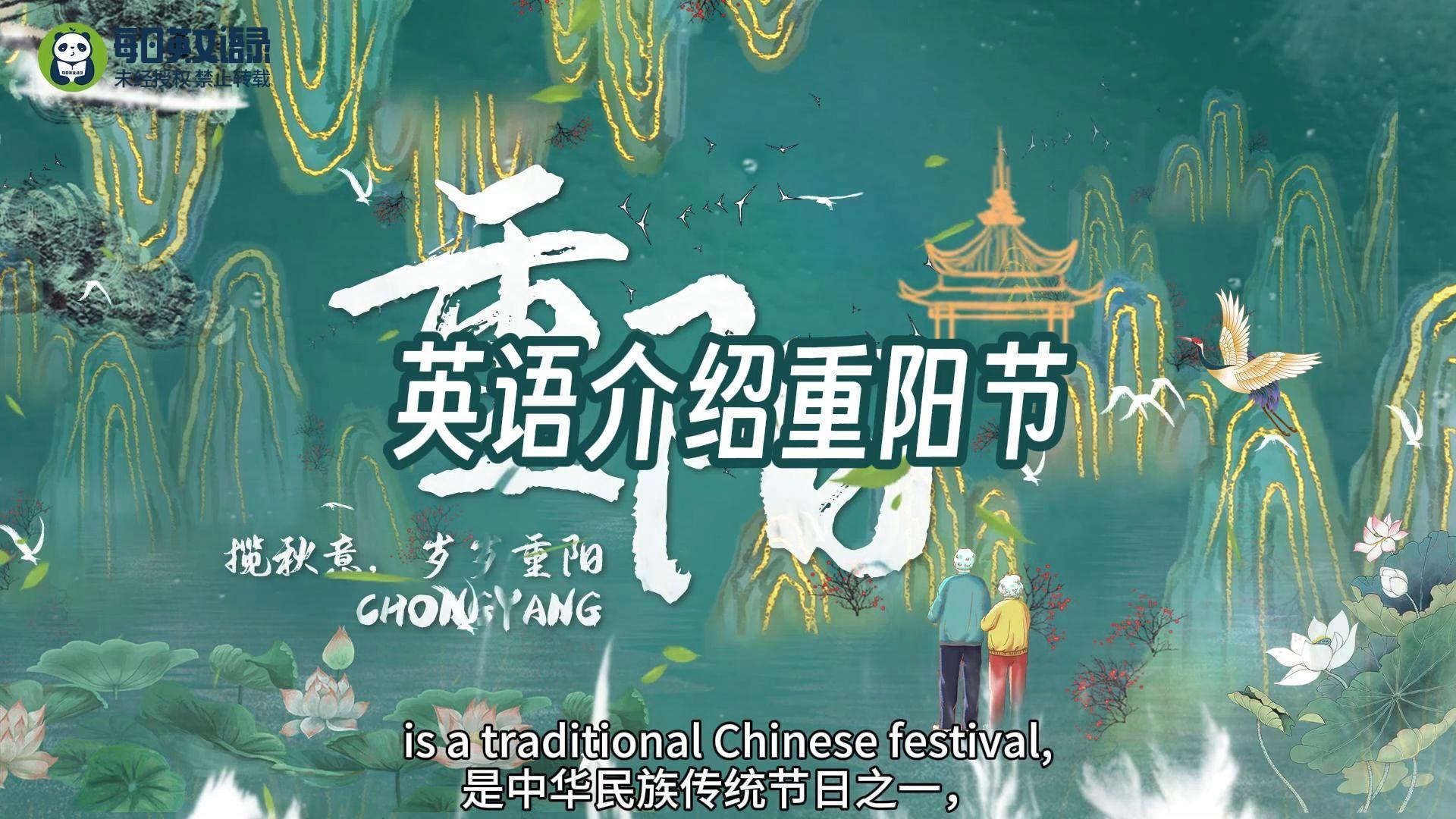
The Customs: Mountains, Wine, Cakes, and Flowers
Climbing mountains (登高, dēnggāo) is the festival's defining act. Across China, families and friends ascend whatever elevation is available — a sacred peak like Taishan or Huashan, a local hill, even the roof of a tall building in flat, urban terrain. The act is part exercise, part pilgrimage, part defiance of gravity and mortality. In Beijing, the Fragrant Hills (香山) turn crimson with smoke trees in October, and hundreds of thousands climb their slopes on Chongyang weekend. In the south, the karst peaks of Guilin or the misty heights of Huangshan draw their own pilgrims. The higher one climbs, the closer one comes to heaven — and the further one leaves behind the miasmas, the sorrows, the small concerns of the lowland world.
Drinking chrysanthemum wine (菊花酒, júhuā jiǔ) is the festival's second great pleasure. Chrysanthemums bloom in the ninth month, defying the first frosts with their dense, golden, faintly bitter blossoms. Steeped in rice wine with herbs, they produce a pale amber liquor said to ward off evil, sharpen the eyes, and extend life. The poet Tao Yuanming (陶渊明), the great recluse of the Eastern Jin Dynasty, made chrysanthemums his personal emblem — "Picking chrysanthemums by the eastern hedge, I gaze afar at the southern mountains" — and his association of the flower with noble withdrawal from a corrupt world gave chrysanthemum wine an additional flavor: the taste of integrity, of refusing to bloom when everyone else blooms.
Eating Chongyang cake (重阳糕, Chóngyáng gāo) is a pun made edible. The word for cake (糕, gāo) is a homophone of "high" (高, gāo) — so eating the cake is a symbolic substitute for climbing, a way of "ascending" for those too old or frail to manage a mountain. The cakes are layered — often nine layers, for the nine of the festival — studded with nuts, dried fruits, and sometimes a small pennant flag on top. In some regions, parents place a piece of cake on their children's foreheads at dawn, murmuring blessings for growth and advancement.
Wearing zhuyu (茱萸, dogwood/cornel) was once universal but has largely faded. The aromatic berries and leaves of the cornel tree were tied in small red pouches and worn on the arm or pinned in the hair. Their sharp, medicinal scent was believed to repel evil spirits and insects. The custom survives mainly in poetry and in the occasional traditional-medicine market where dried zhuyu is still sold in autumn.
Wang Wei's Poem: The Most Famous Homesick Verse in Chinese
No discussion of Chongyang is complete without the poem that every Chinese schoolchild memorizes before the age of ten. Wang Wei (王维), the Tang Dynasty poet-painter, wrote it at seventeen, far from his family in Shandong:
"独在异乡为异客,每逢佳节倍思亲。
— Wang Wei (王维), "九月九日忆山东兄弟" ("Thinking of My Brothers in Shandong on the Ninth of the Ninth"), 716 CE
遥知兄弟登高处,遍插茱萸少一人。"
In translation: "Alone in a foreign land, a stranger among strangers; at every festival, I miss my family doubly. From afar I know my brothers are climbing high today, pinning zhuyu sprigs in their hair — and one person is missing." The poem's power lies in its inversion: Wang Wei does not describe his own loneliness directly. Instead, he imagines his brothers on the mountainside, performing the festival's rituals, and noticing his absence. The grief is located not in the speaker but in the empty space where he should be. It is a poem about being the missing person in someone else's celebration — and for over thirteen centuries, every Chinese person who has spent a festival far from home has felt its truth like a physical ache.
The Hermit Among Flowers: Chrysanthemum Symbolism
The chrysanthemum (菊花, júhuā) is not merely Chongyang's decorative motif; it is one of the "Four Gentlemen" (四君子) of Chinese art — alongside the orchid, bamboo, and plum blossom — each representing a cardinal virtue. The chrysanthemum represents nobility in adversity, the refusal to compromise, the grace of enduring when conditions turn hostile. While other flowers bloom in the easy abundance of spring, the chrysanthemum waits until autumn, until the first killing frosts, and then opens its dense, intricate blossoms in colors of gold, rust, and deep burgundy. It is, in the traditional classification, "the hermit among flowers" (花中隐士) — the one who withdraws from the crowd not out of weakness but out of principle.
This symbolism made the chrysanthemum the natural flower of longevity and dignified aging. It does not rage against the dying season; it blooms within it, transforming decline into beauty. Small wonder that Chongyang, the festival of the ninth month, adopted it as its emblem. Small wonder that in 1989, when the Chinese government designated the Double Ninth as National Seniors' Day (老人节, Lǎorén Jié), the chrysanthemum was already waiting as the perfect symbol: the flower that is most beautiful when everything else has given up.
Elders' Day: A Modern Transformation
In 1989, the People's Republic of China officially renamed the Double Ninth Festival as Seniors' Day (老人节) or Elders' Day, leveraging the homophonic blessing of "double nine" sounding like "long-lasting" to create a national day of respect for the elderly. In 2012, the Law on Protection of the Rights and Interests of the Elderly formally enshrined the ninth of the ninth month as a legal holiday dedicated to honoring senior citizens.
The modern observance blends the ancient and the civic. Families visit elderly parents and grandparents, bringing gifts of food, warm clothing, and — most importantly — time. Communities organize free health check-ups, calligraphy exhibitions, and mountain outings for retirees. Nursing homes host performances. Government officials visit centenarians. The media runs features on filial piety (孝, xiào), that foundational Confucian virtue which holds that caring for one's parents is the root of all moral character. In a rapidly aging society — China's population over sixty now exceeds 280 million — the festival carries an urgency that transcends sentimentality. It is a national reminder that a civilization is judged by how it treats those who can no longer climb the mountain on their own.
Climbing Still: The Festival's Enduring Ascent
On a clear October morning, drive to the outskirts of any Chinese city and you will see them: families streaming up hillside paths, grandparents leaning on grandchildren's arms, toddlers carried on fathers' shoulders, thermoses of chrysanthemum tea clutched in weathered hands. They climb slowly. They stop often. They point at the view and say, "Look how far you can see." And in that simple act — the deliberate, communal, intergenerational act of going up together — the Double Ninth Festival fulfills its oldest purpose. Not to conquer the summit. Not to escape the plague. But to stand, for one day, above the ordinary, and to look down with gratitude at the long road already traveled. The mountain does not care how fast you climb. It only asks that you keep going up.