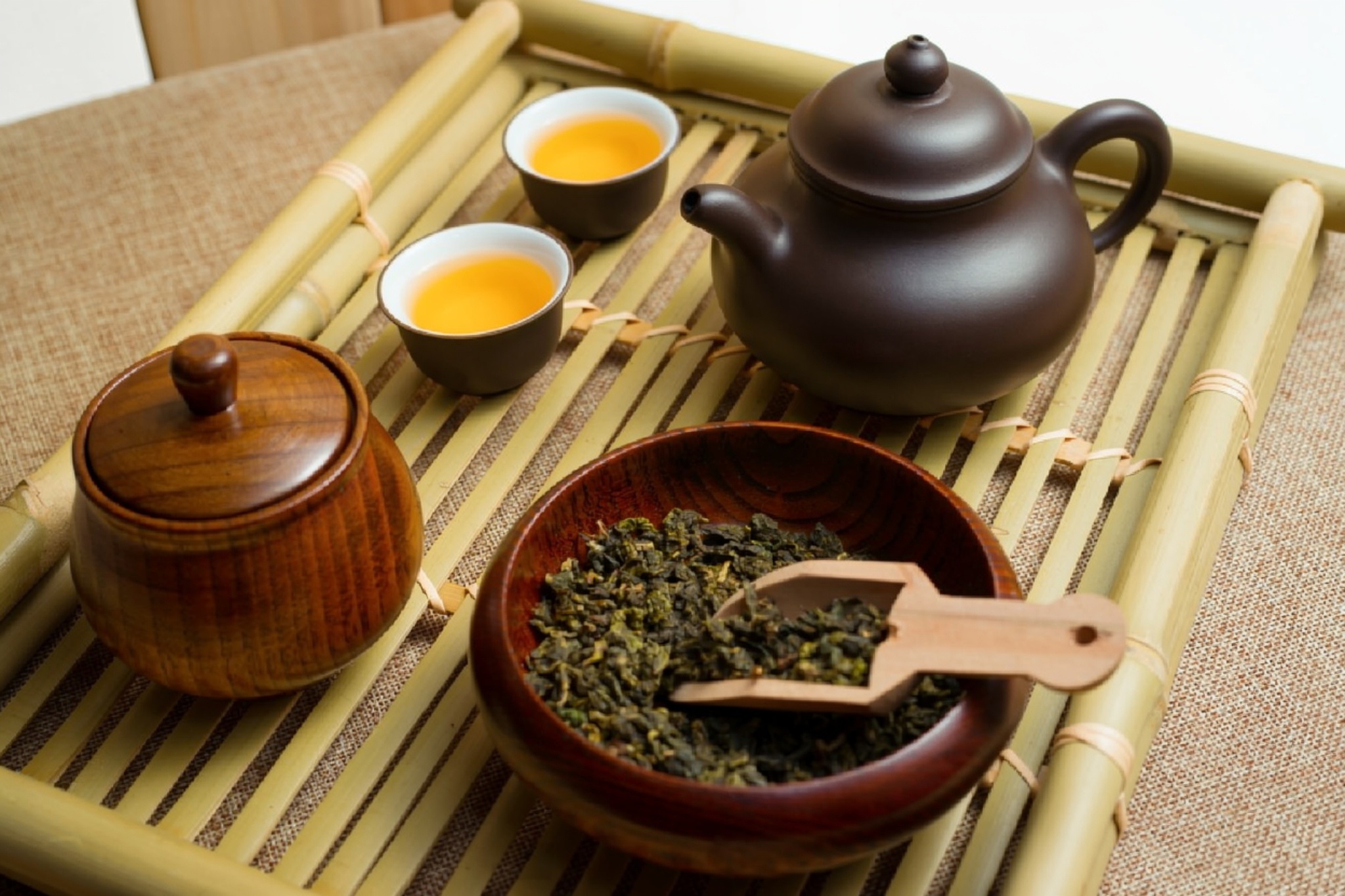
Long before coffeehouses dotted the streets of London and Paris, long before the British ever dreamed of afternoon tea, the Chinese had already elevated the humble tea leaf into an art form, a spiritual practice, and a philosophy of life. For nearly five thousand years, tea has been far more than a beverage in China — it is medicine, meditation, social ritual, and a mirror held up to the soul of a civilization. To understand tea is to understand something essential about the Chinese way of being in the world.
The Legend of Shennong and the Discovery of Tea
Every great tradition needs an origin myth, and tea's is among the most evocative in Chinese culture. The legend tells of Shennong, the Divine Farmer, one of the mythical Three Sovereigns who taught humanity the arts of agriculture and herbal medicine. Around 2737 BCE, as the story goes, Shennong was boiling water beneath a wild tree when a gust of wind carried several leaves into his pot. The water turned a delicate gold-green, and an intoxicating aroma rose from the vessel. Being the tireless experimenter he was — legend says he tasted seventy-two poisonous herbs in a single day to discover their medicinal properties — Shennong drank the infusion and felt a remarkable clarity wash over him. He named the plant cha (茶), and thus tea was born.
Whether or not Shennong existed, the historical record confirms that tea cultivation and consumption in China dates back at least three thousand years. The earliest physical evidence comes from tea residues found in the tomb of Emperor Jing of Han (d. 141 BCE), proving that tea was already a prized commodity among the elite by the second century before the common era. By the Tang Dynasty (618–907 CE), tea had become a national obsession, and the scholar Lu Yu composed his masterwork, the Cha Jing (Classic of Tea), the first known monograph devoted entirely to the cultivation, preparation, and appreciation of tea.
"Tea is of a cold nature. If one is virtuous and temperate, it is most fitting. It can dispel heat, relieve thirst, and calm the spirit."
— Lu Yu, Cha Jing (The Classic of Tea), 760 CE
The Six Families of Chinese Tea
Chinese tea is classified into six great families based on the degree and method of oxidation and processing. Each family represents not merely a flavor profile but an entire worldview of patience, terroir, and transformation.
Green tea (绿茶) is unoxidized, its leaves quickly heated after picking to halt enzymatic change. The result is fresh, vegetal, and luminous — the taste of spring itself. White tea (白茶) undergoes minimal processing, simply withered and dried, preserving a delicate sweetness and silvery appearance. Yellow tea (黄茶) adds a gentle "smothering" step that mellows the grassiness of green tea into something rounder and more golden.
Oolong tea (乌龙茶) occupies the vast middle ground between green and black, partially oxidized anywhere from ten to seventy percent, yielding an extraordinary range from floral and creamy to roasted and mineral. Black tea (红茶, literally "red tea" in Chinese) is fully oxidized, producing malty, robust, and sometimes fruity liquors. Finally, dark tea (黑茶) undergoes post-fermentation through microbial action, developing deep, earthy complexity that improves with age — much like fine wine.
The Gongfu Ceremony: Patience Made Visible
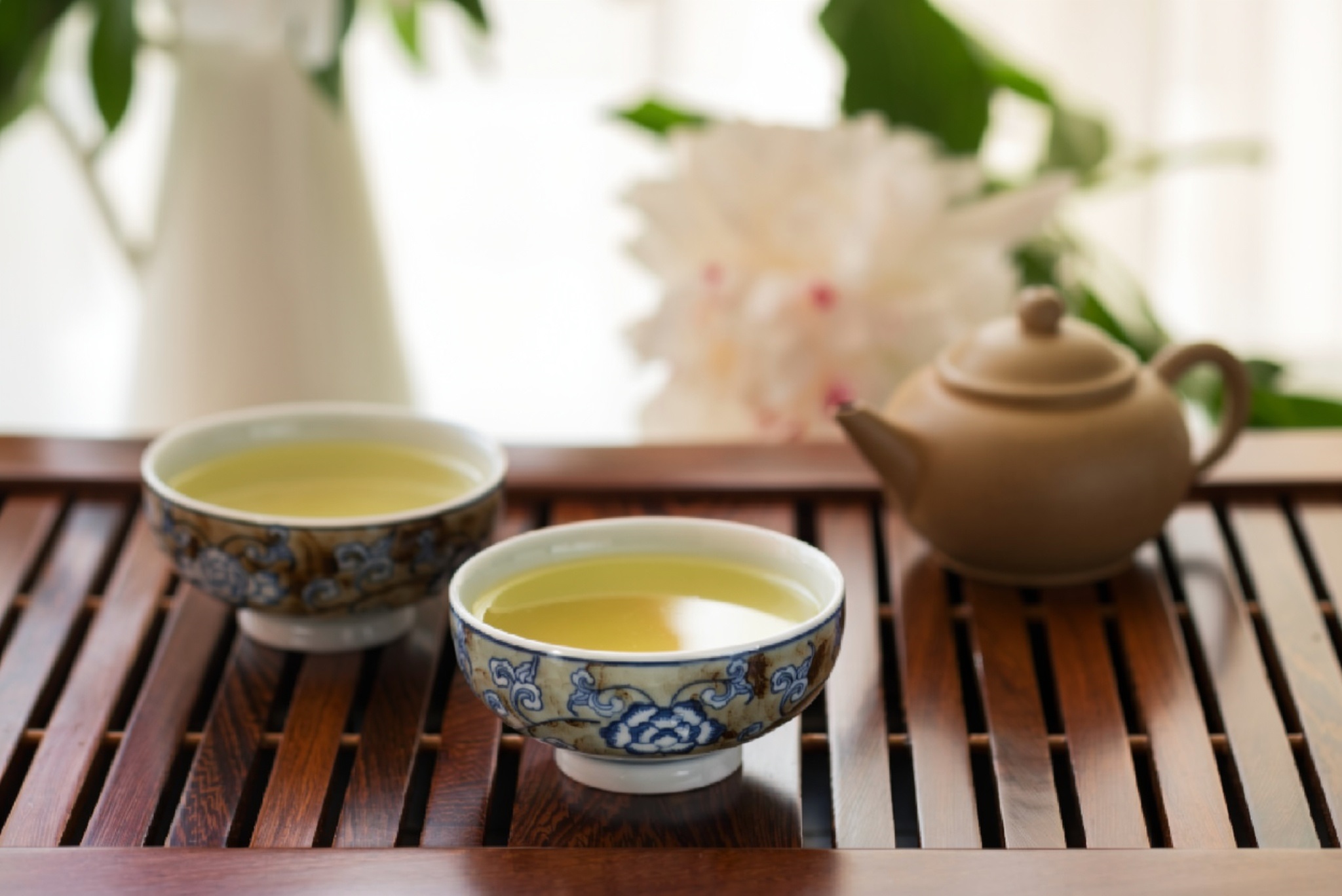
The gongfu tea ceremony (功夫茶) — literally "tea prepared with great skill and effort" — is the highest expression of Chinese tea culture. Originating in the Chaoshan region of Guangdong province and refined over centuries in Fujian, gongfu tea is not a performance but a practice: a discipline of attention that transforms the act of brewing into moving meditation.
The ceremony begins with warming the vessels — the small Yixing clay teapot or porcelain gaiwan, the fairness pitcher, the aroma cups, and the tasting cups are all rinsed with boiling water. This is not mere hygiene; it is an awakening of the tools, a signal to the mind that ordinary time has ended and tea-time has begun. The leaves are then introduced, often filling a third of the pot, and a brief first infusion is poured off immediately to "wash" and open the leaves. Subsequent infusions last mere seconds — five, ten, fifteen — each poured with precision and tasted with full attention.
A single session may yield ten or more infusions from the same leaves, each revealing a different facet of the tea's character. The drinker is invited to notice how the flavor evolves: the first cup bright and assertive, the middle cups deep and rounded, the final cups gentle and sweet, like the arc of a life well lived.
Sacred Vessels: Yixing Clay and the Gaiwan
No discussion of Chinese tea is complete without honoring its vessels. The Yixing clay teapot (紫砂壶), crafted from the unique purple clay deposits near Yixing in Jiangsu province, has been the connoisseur's instrument since the Ming Dynasty. The porous, unglazed clay absorbs tea oils over years of use, building a patina that seasoned drinkers call the pot's "memory." A well-seasoned Yixing pot, it is said, can brew a flavorful cup with nothing but boiling water.
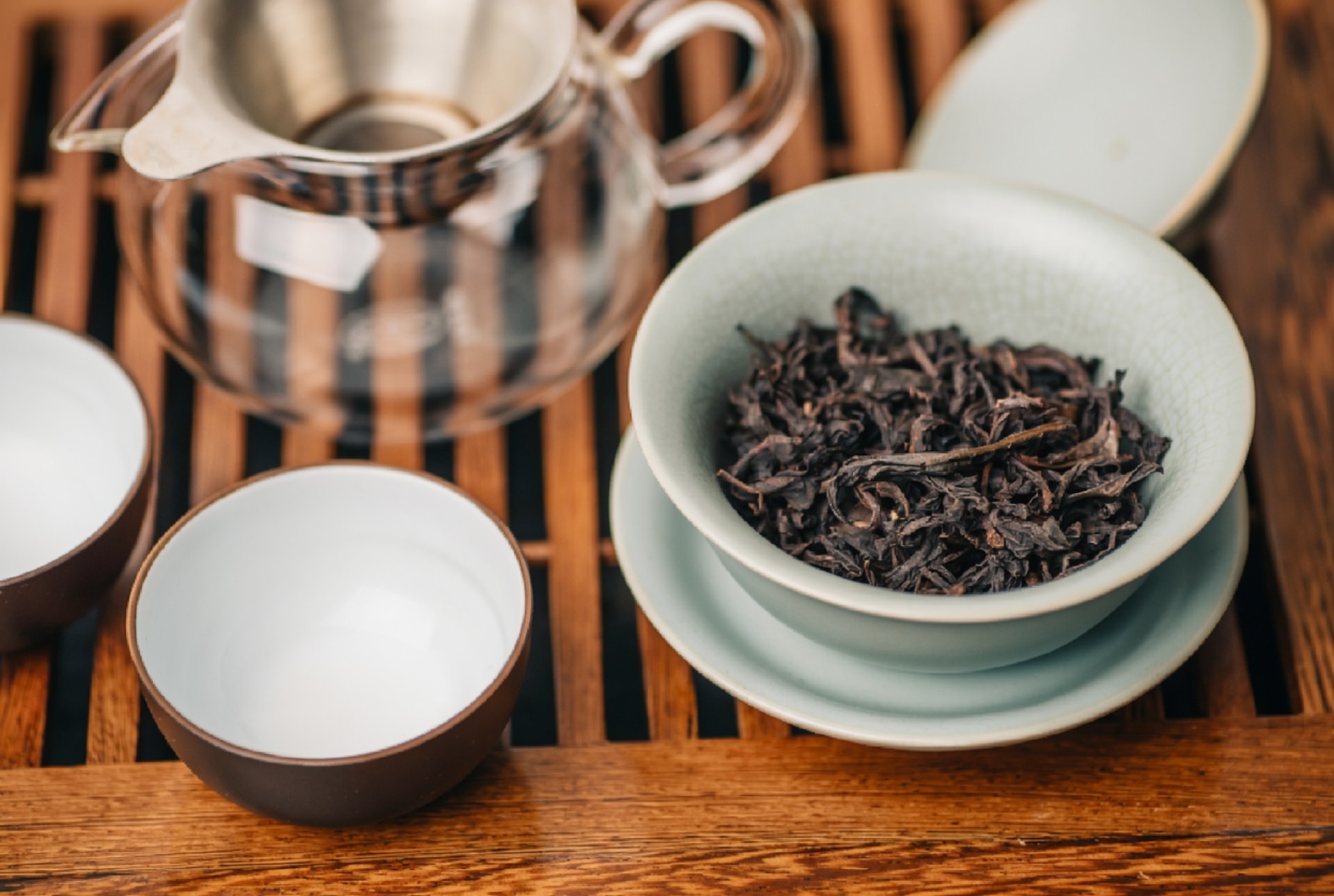
The gaiwan (盖碗), a lidded bowl with a saucer, offers a different philosophy. Transparent and unadorned, usually white porcelain, it makes no attempt to improve the tea — it simply presents it honestly. The drinker uses the lid to hold back the leaves while sipping directly from the bowl, an intimate and unmediated encounter. Where the Yixing pot transforms, the gaiwan reveals.
和敬清寂: The Philosophy in the Cup
The four characters 和敬清寂 — harmony (和), respect (敬), purity (清), and tranquility (寂) — are often cited as the spiritual pillars of the tea way. Though the formulation was codified in Japanese tea culture, its roots are thoroughly Chinese, drawing on Confucian propriety, Daoist naturalness, and Chan Buddhist mindfulness in equal measure.
Harmony speaks to the balance of flavors, the accord between host and guest, the alignment of human activity with natural rhythm. Respect governs every gesture: the way one holds the cup with both hands, the way one pours for others before oneself. Purity is both literal — the clean vessels, the clear water — and metaphorical, an aspiration toward an uncluttered mind. Tranquility is the fruit of the practice: the silence that settles over a tea table as conversation softens and attention deepens.
"Tea and Zen share one taste."
— 茶禅一味, traditional Chan Buddhist saying
Legendary Leaves: Longjing, Da Hong Pao, and Pu-erh
Among China's thousands of named teas, a few have achieved legendary status. West Lake Longjing (西湖龙井), the "Dragon Well" green tea from Hangzhou, has been prized since the Song Dynasty and was designated a tribute tea by the Qing emperor Qianlong. Its flat, spear-shaped leaves produce a liquor of chestnut sweetness and jade-green color, best harvested in the brief window before the Qingming festival in early April.
Da Hong Pao (大红袍), the "Big Red Robe" oolong from the Wuyi Mountains of Fujian, carries a myth of a scholar cured of illness by tea, who later draped his red graduation robe over the bushes in gratitude. The original mother plants, growing on a cliff face in the Nine Bends gorge, number only six and produce a mere few hundred grams of tea per year — making them, gram for gram, more valuable than gold.
Pu-erh (普洱), the dark tea of Yunnan, defies the Western assumption that tea is best consumed fresh. Compressed into cakes and aged for years or decades, pu-erh develops a profound earthiness, a smoothness like aged wood, and a sweetness that lingers for minutes. In Yunnan, families store pu-erh as others store wine, opening a cake to mark a birth, a marriage, or the turning of a year.
Tea and Meditation: The Practice of Presence
In Chan Buddhist monasteries across China, tea has been inseparable from meditation practice for over a millennium. The monk Zhaozhou Congshen (778–897 CE) famously answered every spiritual question with the same two words: "Drink tea." The instruction was not dismissive but profound — pointing the seeker away from abstract speculation and back to the immediate, embodied present. The warmth of the cup in your hands. The steam rising. The first sip. Nothing else exists.
This is the ultimate teaching of the Chinese way of tea. In a civilization that produced vast philosophical systems, intricate bureaucracies, and relentless ambition, tea offered a countercurrent: a daily invitation to slow down, to attend fully to a single small act, and to find in that attention a completeness that no achievement could provide. The cup is small. The moment is brief. And yet, as the old masters knew, it contains everything.