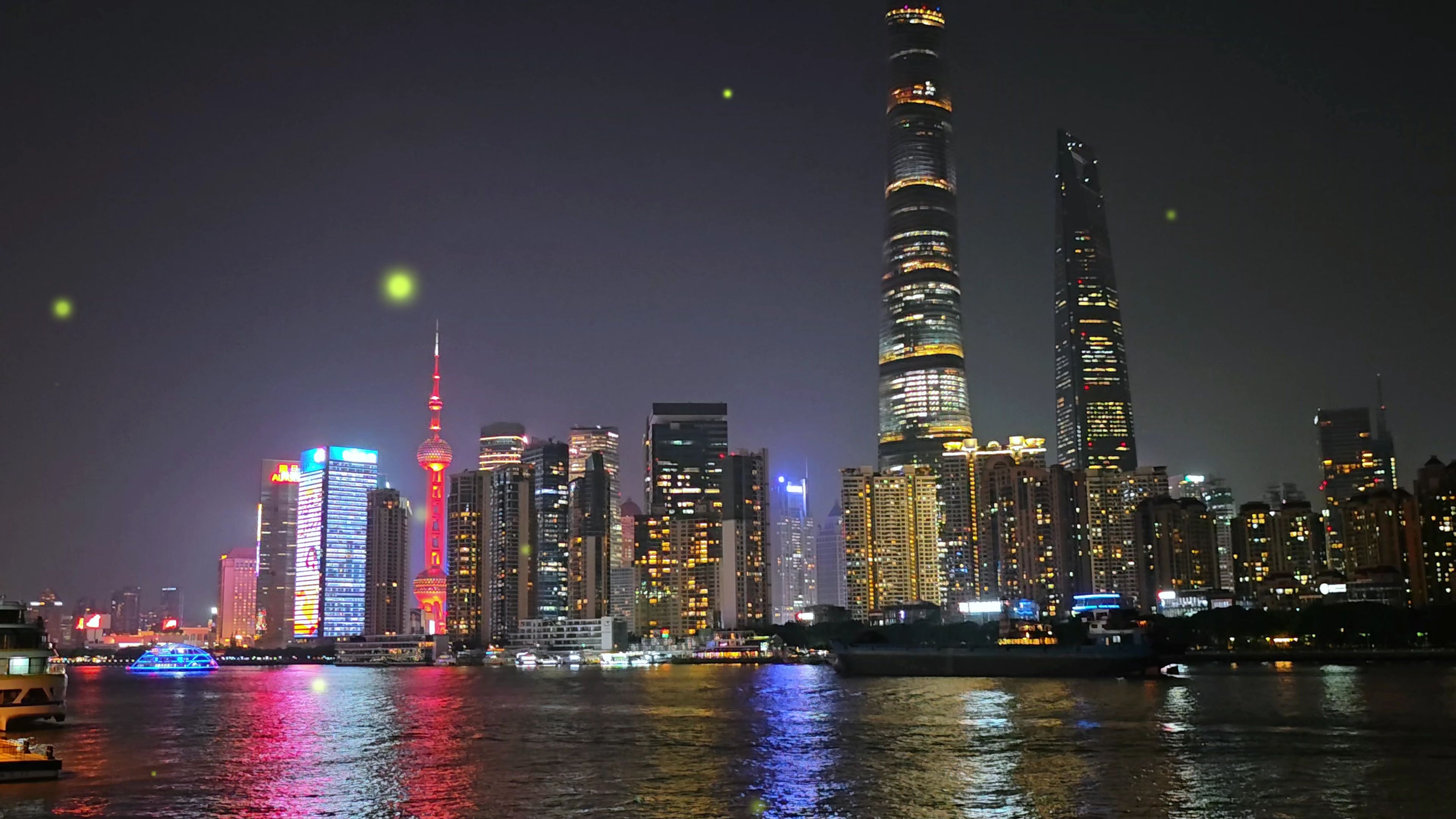
There is a moment, just after the sun slips below the rooftops of Puxi, when the Bund holds its breath. The sky bruises into shades of violet and burnt amber. The Huangpu River, that broad muscular artery of commerce, turns to hammered bronze. And then, as if on cue, the lights ignite across the water in Pudong — first the Oriental Pearl Tower, blushing pink and magenta, then the glass canyons of Lujiazui filling with ten thousand points of gold. You stand on the promenade with the evening crowd pressing gently at your shoulders, the river wind carrying the faint diesel-and-salt smell of barges, and you understand viscerally that you are standing at the exact seam where two Chinas meet. Behind you: a colonnade of granite and limestone, a century of imperial ambition frozen in neoclassical columns and Art Deco spires. Before you: a skyline that did not exist thirty-five years ago, a vertical city conjured from farmland and political will. No other promenade on earth compresses so much history, so much contradiction, and so much sheer spectacle into a single 1.5-kilometer walk.
The Bund — from the Hindi word band, meaning embankment — is not merely a tourist attraction. It is Shanghai's founding myth made physical, the stage upon which the city's improbable transformation from fishing village to global megacity has been performed, act by act, for nearly two hundred years.
A Walk Through Living History
Stretching from the Garden Bridge in the north to Yan'an Road in the south, the Bund's western flank is lined with fifty-two buildings of such stylistic diversity that architectural historians have dubbed the stretch the "Museum of International Architecture." Neoclassical, Gothic, Baroque, Art Deco, Renaissance Revival, Beaux-Arts — the full vocabulary of Western building traditions is represented here, compressed into a single boulevard like a three-dimensional encyclopedia of early twentieth-century design.
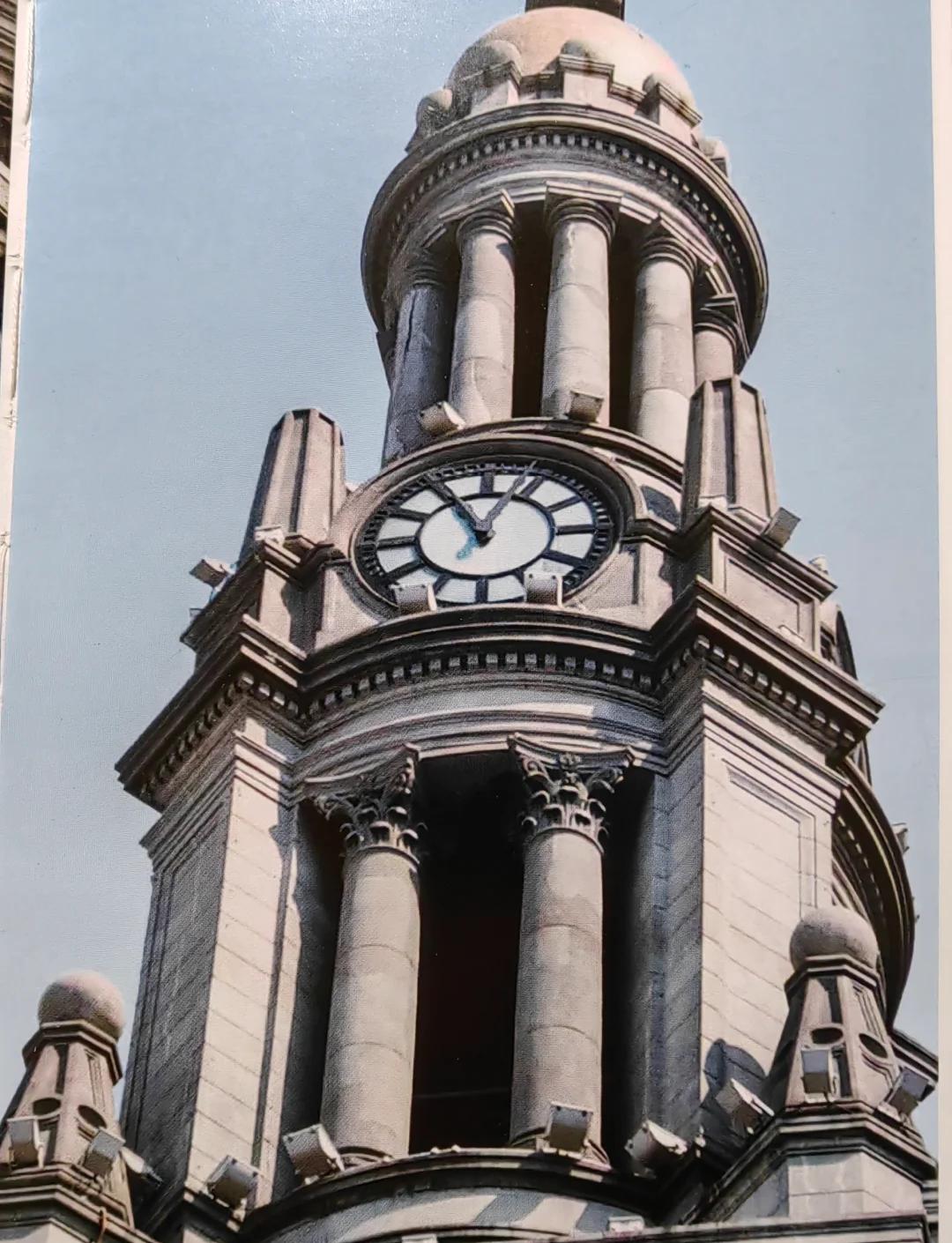
The grandest among them is the former HSBC Building at No. 12, completed in 1923. Its dome, modeled loosely on St. Paul's Cathedral in London, crowns a facade of austere Ionic columns and allegorical mosaics depicting the bank's global reach. Locals once called it the most luxurious building between the Suez Canal and the Bering Strait. A few doors north, the Customs House rises with its unmistakable clock tower — known affectionately as "Big Ching" — whose chimes, modeled on Big Ben, have marked the hours over the river since 1927. The sound still carries across the water on still nights, a ghostly metronome counting out a century of change.
Further along, the Peace Hotel (formerly the Cathay Hotel) thrusts its green pyramidal roof skyward in pure Art Deco exuberance. Opened in 1929 by Sir Victor Sassoon, it hosted Charlie Chaplin, Noël Coward, and the cream of Shanghai's jazz-age society. Its Jazz Bar still operates, and on certain evenings you can hear an elderly band play "Moonlight on the Huangpu" to an audience of wide-eyed travelers, the melody curling through the same lacquered wood and brass fixtures that witnessed the city's gilded interwar years.
The Bank of China building at No. 23 offers a quieter revelation: its roofline incorporates traditional Chinese dougong bracketing and glazed tile work, a deliberate assertion of national identity amid the foreign architectural vocabulary. It is, in stone and steel, an argument about who Shanghai belongs to.
From Mudflat to Metropolis: The Bund's Story
Before the treaties and the trading houses, before the granite and the gold leaf, the Bund was nothing more than a muddy towpath — a narrow strip of silt where boatmen hauled junks upstream against the current. The name itself betrays its humble origins: a band of earth, no more.
Everything changed with the Treaty of Nanjing in 1842, which ended the First Opium War and forced China to open five ports to foreign trade. Shanghai was among them. Within a decade, the British had established a concession along the waterfront, and the first godowns and trading offices — flimsy timber structures raised above the flood line — appeared where the great stone buildings now stand. The French followed to the south; the Americans to the north. The Bund became the commercial nerve center of an entire hemisphere.
By the 1920s and 1930s, Shanghai had earned its intoxicating nickname: the "Paris of the East." The Bund was its Champs-Élysées. Opium fortunes and textile millions flowed through its banks. The jazz clubs and ballrooms of the International Settlement throbbed until dawn. It was a city of extreme contrasts — of Rolls-Royces and rickshaws, of marble lobbies and cholera alleys — but the Bund, gleaming and self-assured, projected only power.
"The Bund is not a street. It is a verdict — rendered in stone, on the question of who controlled the world's money." — Jonathan Spence, historian of modern China
After 1949, the foreign firms departed. The buildings were nationalized, repurposed as government offices and state enterprises. The Bund fell quiet, its grandeur dimmed under decades of soot and political austerity. Then, in 1990, the central government announced the development of Pudong — the flat, largely agricultural land directly across the river. The decision was, in retrospect, the single most consequential urban planning choice in modern Chinese history. Within a generation, the rice paddies became a forest of glass towers, and the Bund was reborn as the viewing platform for China's economic miracle.
Across the River: Pudong's Skyline
Turn your back on the old buildings and face east. The view that greets you is, by any measure, one of the most dramatic urban panoramas on the planet. The Oriental Pearl Tower, completed in 1994, still anchors the composition with its retro-futuristic spheres — a design that once seemed fantastical and now reads as the confident first brushstroke of an entirely new skyline.
Beside it, the Jin Mao Tower (1999) rises in elegant pagoda-like setbacks to 421 meters, its stainless-steel cladding catching the afternoon light like a blade. The Shanghai World Financial Center (2008) — universally nicknamed "the bottle opener" for its distinctive trapezoidal aperture — pierces the sky at 492 meters. And towering above them all, the Shanghai Tower, completed in 2015, twists 632 meters into the clouds, its double-skin glass facade spiraling like a dragon ascending. It is the tallest building in China and the third tallest in the world.
What staggers the mind is the timeline. In 1990, a farmer named Zhou could stand in his vegetable plot in Lujiazui and see, across the water, the Bund's colonial facades. Today, his grandchildren work on the 80th floor of a tower that did not exist when their parents were born. The Pudong skyline is not merely architecture; it is a national argument made visible — proof, rendered in steel and glass, of what three decades of sustained ambition can accomplish.
The Bund at Night
The Bund is beautiful by day, but it is transcendent after dark. As the sky deepens to indigo, the floodlights switch on along the historic facades, washing the granite in warm gold. Across the river, Pudong erupts in a choreographed light show — LEDs rippling across tower surfaces in waves of blue, magenta, and green, the Oriental Pearl pulsing like a slow heartbeat. The reflections shatter and reassemble on the river's surface, doubling the spectacle.
The promenade itself becomes a river of humanity. Couples lean against the railing. Children hoist glowing balloons. Street photographers with professional rigs offer portraits with the skyline as backdrop. The air fills with a babel of Mandarin, Shanghainese, English, Korean, and the occasional accordion rendition of "La Vie en Rose." It is chaotic, joyful, and utterly alive.
For the fullest experience, board one of the Huangpu River cruise boats that depart from the Shiliupu Wharf. The ninety-minute voyage carries you beneath the Bund's illuminated facades and into the canyon of Pudong's towers, the buildings rising on both sides like the walls of a luminous gorge. From the water, the scale of the place finally registers: you are small, the river is old, and the city is still, impossibly, growing.
Visiting the Bund: A Practical Guide
Best times to visit: Arrive in the late afternoon, around 4:30 or 5:00 PM, so you can appreciate the architecture in daylight, watch the sunset paint the river, and stay for the full illumination after dark. Weekday evenings are noticeably less crowded than weekends and holidays. Spring (April-May) and autumn (October-November) offer the most comfortable temperatures and clearest skies.
Getting there: The most convenient access is Metro Line 2 or Line 10 to Nanjing Road East station. Exit at the eastern end and walk ten minutes straight down Nanjing Road toward the river — the street itself is a pedestrian shopping boulevard worth the stroll. Alternatively, Line 2 to Lujiazui station places you on the Pudong side for the reverse view looking back at the Bund.
Walking route: Begin at the Garden Bridge (Waibaidu Bridge) at the northern end, an iron truss structure dating to 1907, and walk south along the promenade. Allow at least forty-five minutes to absorb the buildings. Cross to the Pudong side via the Bund Sightseeing Tunnel (a kitschy but fun underwater tram) or the ferry from Jinling Road, and walk the Lujiazui waterfront for the classic photograph of the Bund's skyline.
Nearby attractions: Nanjing Road, China's most famous shopping street, runs perpendicular from the Bund. The Yu Garden and Old City bazaar lie fifteen minutes to the south. The former French Concession, with its plane-tree-lined avenues and cafe culture, is a short taxi ride west. Together, these form a full day's exploration of Shanghai's layered identity.
The Bund asks nothing of you except that you show up and look. In its 1.5 kilometers of riverfront, it holds a question that China has been asking itself for two centuries: how do you honor what you were while becoming what you will be? Standing at the railing, old stone at your back, new light in your eyes, the answer feels less like a contradiction and more like a conversation — one that the river, patient and brown, has been carrying to the sea all along.