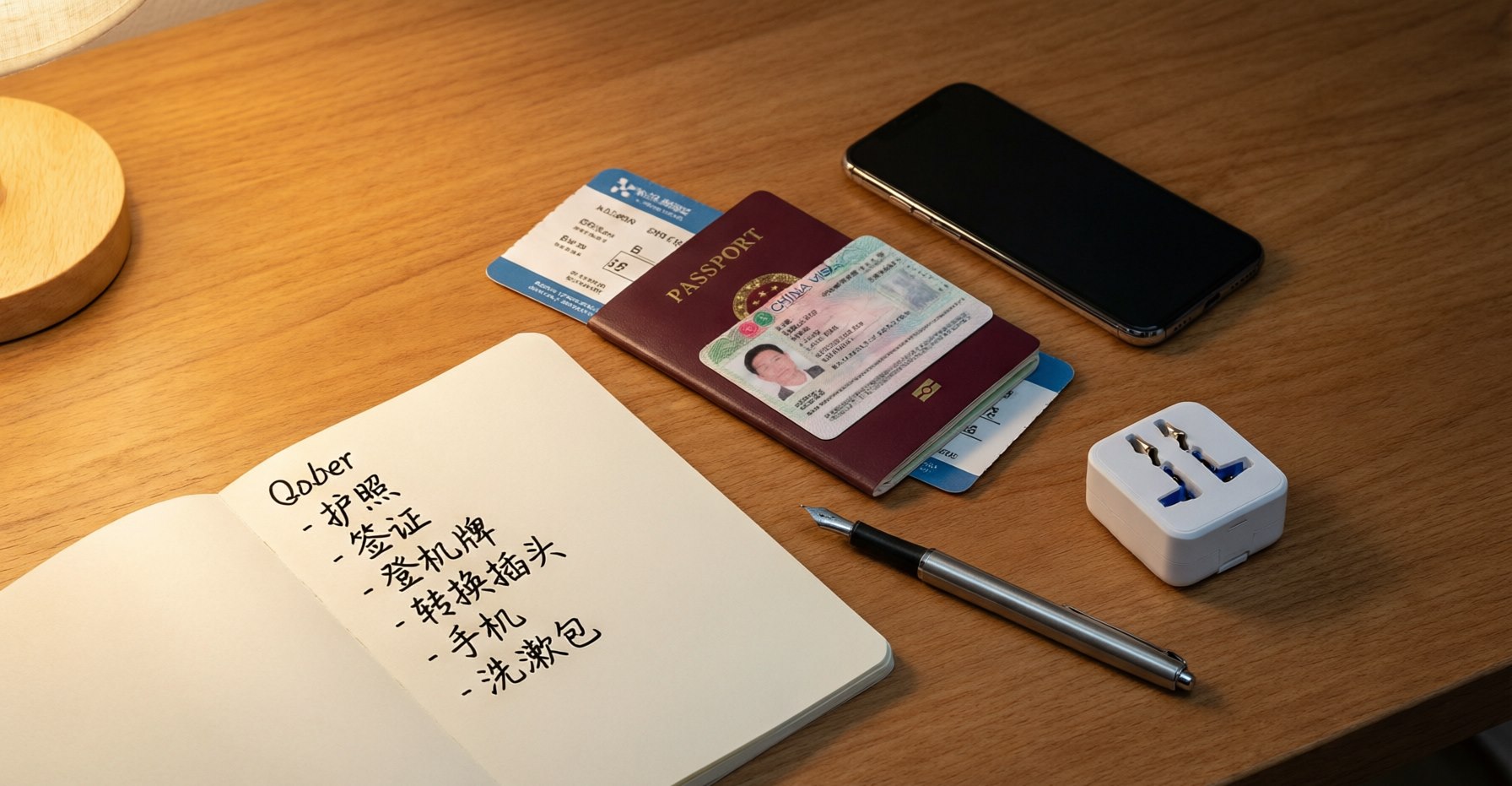
Every guide in this series has handed you a piece of the puzzle — payments, transport, health, the apps that run daily life. This is the page that snaps them together. Think of it as the final walk-through before you zip up your bag: a single, ordered list you can run from top to bottom the day before you fly. None of it is difficult. All of it matters. The difference between a traveler who lands in China stressed and one who lands ready is rarely talent or experience — it is simply whether they did this checklist. So pour a coffee, open your notes app, and work your way down. Twenty minutes now buys you a calmer first week on the ground.
Documents
Paperwork is the one category where a mistake cannot be improvised away at the airport, so it comes first and gets the most scrutiny.
- Passport valid for at least six months beyond your travel dates, with blank visa pages remaining. China enforces the six-month rule strictly; an expiring passport can void an otherwise valid visa.
- Chinese visa obtained and double-checked. Confirm the validity dates, the number of entries permitted, and that your name and passport number match your document exactly. A single transposed digit can stop you at the border.
- Printed and digital copies of everything. Photograph your passport, visa, flight confirmations, and hotel bookings; store the images in your phone and email them to yourself so they survive a lost device.
- Travel insurance details saved and accessible, including the emergency assistance number.
Money & Payments
China runs on mobile payment, and the time to set that up is before you board, not after you land.
- Alipay configured with your passport verified and an international Visa or Mastercard linked. Run a test transaction and notify your bank of your travel dates.
- WeChat Pay set up as a backup channel if you can link a card there too — two working payment apps mean no single failure strands you.
- A reserve of cash in small denominations, a few hundred RMB, for the rare offline moment or vendor without a working QR code.
- A credit card with no foreign-transaction fees kept as a final fallback for hotels and larger purchases.
Apps & Connectivity
Download and configure these on your home network, where verification codes arrive cleanly and app stores behave. Doing it on arrival, on patchy airport WiFi, is a misery you can avoid entirely.
- The core apps installed and accounts created: WeChat, Alipay, Baidu Maps, Trip.com, Pleco, and DiDi. (See our Must-Have Apps guide for what each does and how to set it up.)
- Offline maps downloaded for every destination city on your route, so navigation works with zero signal.
- An offline translation pack downloaded in Pleco or your translator of choice, so language help never depends on data.
- A VPN configured and tested — optional but recommended if you rely on Western services such as Google, Gmail, or WhatsApp, which are blocked on mainland networks. Set it up and confirm it connects before you leave home; troubleshooting from inside the firewall is far harder.
- A connectivity plan — a local SIM, an eSIM, or an international roaming package — so you have data the moment you land.
Health & Comfort
Small physical items, easily forgotten, that make daily life noticeably smoother.
- A universal power adapter in your bag. China uses Type A, C, and I sockets at 220V; a single universal adapter covers them all and charges your phone, camera, and laptop.
- A pack of tissues in your pocket. Public restrooms frequently do not provide toilet paper. This is the single most-mentioned practical tip among seasoned China travelers, and it is true.
- Bottled water as a habit, not an afterthought. Tap water is not safe to drink straight; keep a bottle on you and refill from trusted sources.
- A small personal first-aid kit with any prescription medications (in original packaging, with a copy of the prescription), plus basics for stomach upset, headaches, and blisters.
The Day-Before Final Pass
The last sweep, run the evening before departure, when everything else is packed and you have a clear head.
- Hotel addresses saved in Chinese characters in your phone's notes app — not just the English name, which means little to a taxi driver. Screenshot each one so it survives a dead battery.
- Screenshots of the essentials: return flight confirmation, train booking numbers, hotel address in Chinese, and emergency contacts. A screenshot in your camera roll works when apps and data do not.
- Devices fully charged and a power bank in your carry-on (it must go in cabin baggage, never checked, under aviation rules).
- One last visa and passport check, then a photo of both taken and backed up.
What NOT to Overpack
Preparation is not the same as packing the kitchen sink. A few things travelers routinely over-prepare for, and can relax about:
- Large amounts of cash. With Alipay and WeChat Pay working almost everywhere, you need far less physical money than you think.
- Excessive toiletries and medications. Modern pharmacies and convenience stores in Chinese cities stock the everyday basics; you can replace most things locally.
- A printed guidebook the size of a brick. Offline maps, Pleco, and Trip.com on your phone outperform paper for almost everything a visitor needs.
- Worry about the language. You do not need to be fluent. A translation app, a few saved phrases, and a willingness to point and smile carry you remarkably far.
The payoff: Do all this and you land in China not as a confused tourist wrestling with logistics, but as someone ready to enjoy the experience. The infrastructure is world-class. The food is extraordinary. The history runs five thousand years deep and is visible on every street corner. The people are curious, generous, and genuinely delighted when a foreigner makes even a small effort to engage. The practical barriers are real but finite — and now you know exactly how to clear every one of them.