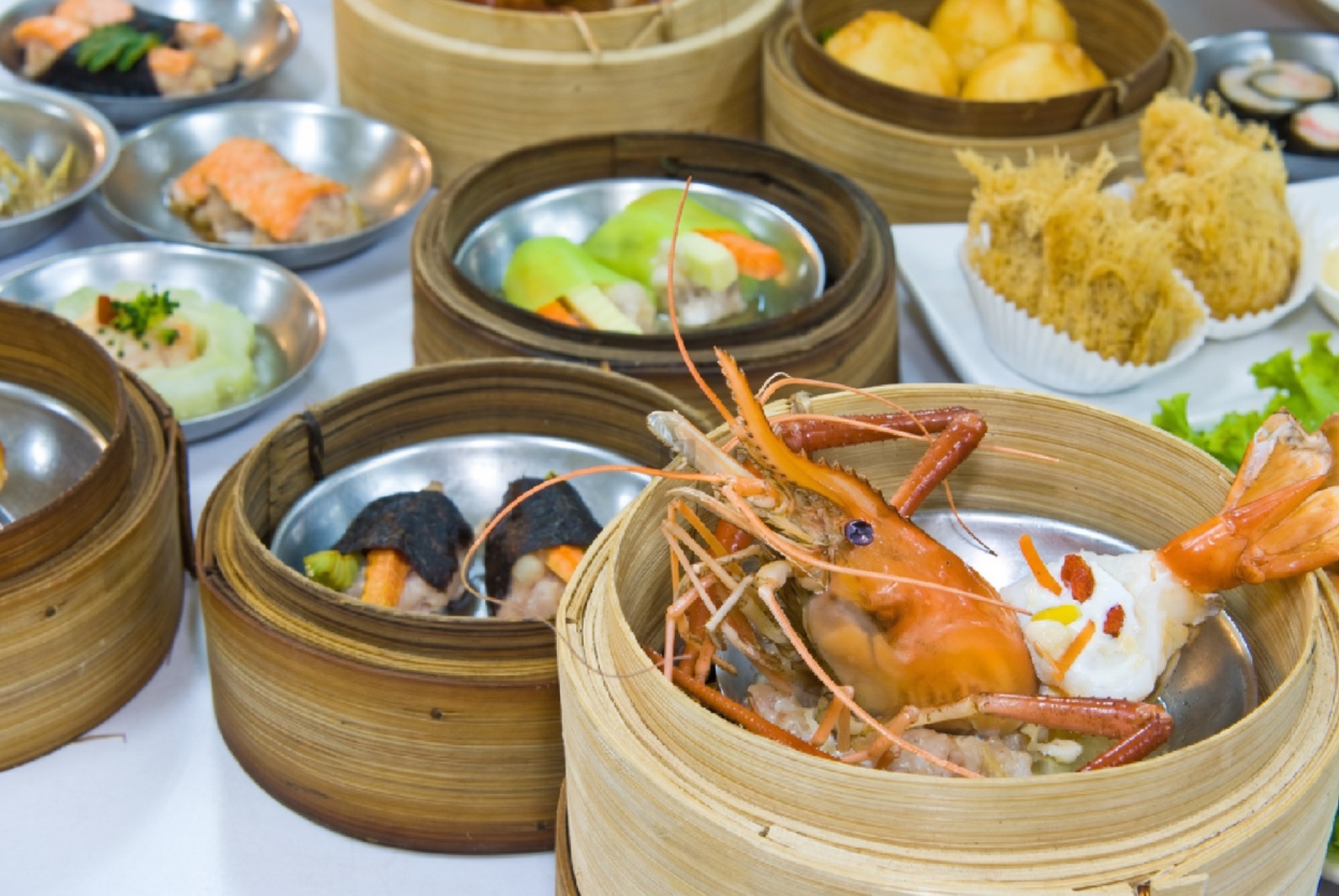
In the Western imagination, the kitchen and the pharmacy occupy separate worlds. One is the domain of pleasure, the other of necessity; one nourishes the senses, the other corrects the body. In China, this division has never existed. For over two thousand years, Chinese civilization has operated on a radically different premise: that the food on your table and the medicine in your cabinet are not two categories but one continuum. The ginger you stir-fry with scallions is the same ginger that warms a cold stomach. The red dates you simmer into congee are the same dates that a physician prescribes to replenish depleted blood. The kitchen is not merely where meals are prepared — it is where health is composed, daily, deliberately, with the same care a calligrapher brings to ink and brush.
This tradition — shiliao (食疗), food therapy, or yaoshan (药膳), medicinal cuisine — is not folk superstition. It is a sophisticated system grounded in the same theoretical framework as acupuncture and herbal medicine: the interplay of yin and yang, the circulation of qi, the correspondence between the five flavors and the five organ systems. It is, arguably, the most accessible branch of Chinese medicine — the branch that requires no needles, no years of apprenticeship, no rare ingredients sourced from distant mountains. It requires only a kitchen, a market, and the willingness to think about food as more than fuel.
药食同源: Medicine and Food Share One Origin
The foundational principle is captured in four characters: yaoshi tongyuan (药食同源) — medicine and food share the same origin. This is not a metaphor. The earliest Chinese pharmacological text, the Shennong Bencao Jing (Divine Farmer's Classic of Materia Medica), compiled around the first century CE, classifies 365 substances into three grades. The upper grade — 120 substances — consists of items that are "non-toxic and suitable for long-term use to nourish life." These are, in essence, foods: jujube dates, lotus seeds, Chinese yam, honey, sesame. They heal not by attacking disease but by strengthening the body's own capacity for balance.
"The superior physician treats disease before it arises; the mediocre physician treats disease as it is about to arise; the inferior physician treats disease after it has arisen."
— Huangdi Neijing (Yellow Emperor's Classic of Internal Medicine)
This passage from the foundational text of Chinese medicine reveals the philosophical priority: prevention over cure, nourishment over intervention. The ideal is not to fight illness but to make illness impossible — to maintain the body in such a state of dynamic equilibrium that pathogenic factors find no purchase. Food, consumed three times daily, is the primary instrument of this maintenance. Every meal is a small act of medicine; every well-composed dish is a prescription for continued health.
Hot, Cold, and the Balance of Yin-Yang
Chinese food therapy classifies all ingredients according to their thermal nature: hot, warm, neutral, cool, or cold. This classification has nothing to do with physical temperature. A bowl of mung bean soup served boiling hot is thermally "cold" — it clears heat from the body, cools the blood, calms inflammation. A cup of ginger tea served over ice would still be thermally "hot" — it warms the middle burner, disperses cold, promotes circulation.
The healthy body exists in dynamic balance between yin (cool, moist, nourishing, inward) and yang (warm, dry, active, outward). Disease arises when this balance tips: too much yang produces heat symptoms — fever, inflammation, irritability, dry mouth. Too much yin produces cold symptoms — fatigue, pallor, loose stools, cold extremities. The food therapist's task is to read the body's current state and adjust the diet accordingly. A person running hot receives cooling foods: mung beans, watermelon, chrysanthemum tea, pear. A person running cold receives warming foods: ginger, lamb, cinnamon, walnuts, leeks.
This is why Chinese grandmothers insist on ginger and brown sugar tea during menstruation, forbid cold water in winter, and serve cooling soups in the dog days of summer. They are not being superstitious. They are practicing, at the domestic level, the same medicine that fills the textbooks of every Traditional Chinese Medicine university in the country.
Eating with the Seasons
The Chinese calendar divides the year into twenty-four solar terms (ershi si jieqi), and traditional food therapy adjusts the diet to each. In spring, when the liver's energy rises with the new growth, the diet favors light, ascending foods: sprouts, young greens, celery, chrysanthemum. In summer, when heat and dampness oppress the spleen, the diet turns to clearing and draining: bitter melon, mung bean, lotus leaf, watermelon. In autumn, when dryness attacks the lungs, the diet moistens: pear, honey, white fungus, lily bulb. In winter, when the kidneys store essence and the body turns inward, the diet nourishes deeply: black sesame, walnuts, lamb, bone broths, dried longan.
This seasonal logic is not arbitrary. It reflects an observation refined over millennia: that the human body is not a closed system but a participant in the larger rhythms of the natural world. To eat against the season is to fight the current; to eat with it is to be carried forward. The winter congee fortified with red dates and astragalus is not merely comforting — it is an act of alignment, a declaration that the body will follow the year's turning rather than resist it.
The Sacred Ingredients
Certain ingredients appear so frequently in Chinese medicinal cooking that they constitute a kind of domestic pharmacopoeia, present in every kitchen from Guangzhou to Harbin. Goji berries (gouqi) nourish the liver and kidneys, brighten the eyes, and enrich the blood — a handful dropped into congee or soup transforms an ordinary meal into a tonic. Red dates (hongzao) tonify qi and blood, calm the spirit, and harmonize other ingredients; they are the peacemakers of the medicinal kitchen, included in nearly every formula to moderate harsher elements.
Ginger (shengjiang) is the great warmer: it disperses cold, settles nausea, and opens the lungs. Dried ginger (ganjiang) works more deeply, warming the spleen and kidneys. Lotus seeds (lianzi) strengthen the spleen, calm the heart, and anchor the spirit — they appear in sweet soups and savory broths alike. Chinese yam (shanyao) is the supreme spleen tonic, gentle enough for infants and the elderly, building digestive strength without generating heat. Astragalus (huangqi) raises yang qi, strengthens the immune defense, and combats the fatigue of overwork.
These are not exotic substances requiring a specialist's knowledge. They are available in any Chinese grocery, inexpensive, and safe for daily use. Their power lies not in dramatic intervention but in cumulative, gentle correction — the same principle by which water shapes stone.
Soups, Congees, and the Art of Slow Extraction
The two supreme vehicles of Chinese food therapy are the soup (tang) and the congee (zhou). Both share a logic of patient extraction: long, gentle cooking draws the medicinal properties from bones, herbs, and grains into a liquid that the weakened body can absorb with minimal digestive effort. A Cantonese laohuo tang (old fire soup) simmers for three, four, sometimes six hours — pork bones with dried scallops, astragalus, and Chinese yam; or a whole chicken with cordyceps, goji, and red dates. The resulting broth is not merely flavorful; it is, in the Chinese understanding, a concentrated essence, a liquid medicine that requires no prescription.
Congee — rice cooked with six or eight times its volume of water until the grains dissolve into a silken porridge — is the food of convalescence, of infancy, of old age, of any body that cannot manage the labor of digestion. But it is also a canvas: add lotus seed and lily bulb for a calming, sleep-promoting supper; add ginger and scallion for a cold-dispersing breakfast; add black sesame and walnuts for a kidney-nourishing winter porridge. The congee adapts to the body's need. It asks nothing. It gives everything.
Modern Science Meets Ancient Wisdom
Contemporary research increasingly validates what Chinese kitchens have known for centuries. Goji berries contain polysaccharides with demonstrated immunomodulatory effects. Ginger's active compounds — gingerols and shogaols — are proven anti-inflammatories and antiemetics. Astragalus polysaccharides show measurable effects on immune cell activity. The thermal classification of foods, while not mapping neatly onto Western biochemistry, correlates with real physiological effects: "warming" foods tend to increase metabolic rate and peripheral circulation; "cooling" foods tend to reduce inflammatory markers.
This convergence does not "prove" Chinese medicine in the reductive Western sense. The Chinese system operates on a different logic — relational, dynamic, pattern-based rather than molecule-based. But it suggests that the two traditions are describing the same territory from different elevations: one mapping the molecular trees, the other reading the ecological forest. The wise eater benefits from both perspectives.
A Practical Philosophy
The beauty of Chinese medicinal food is its democracy. It does not require a physician's visit, a pharmacy's expense, or a patient's passivity. It places the power of healing in the hands of the cook — which is to say, in the hands of everyone. A grandmother adjusting tonight's soup because her grandson has been running a low fever. A young woman adding extra red dates to her congee because her period has left her pale and tired. An elderly man stirring a spoonful of honey into his morning pear-and-lily-bulb soup because autumn has dried his throat.
These are not medical acts in the Western sense. No diagnosis is coded, no insurance claim filed. Yet they are, in the deepest sense, medicine: the daily, loving, attentive practice of keeping the body in harmony with itself and with the world. The kitchen as pharmacy. The meal as prescription. The family table as the first and finest hospital. This is the Chinese way, and it has sustained a civilization for two thousand years.