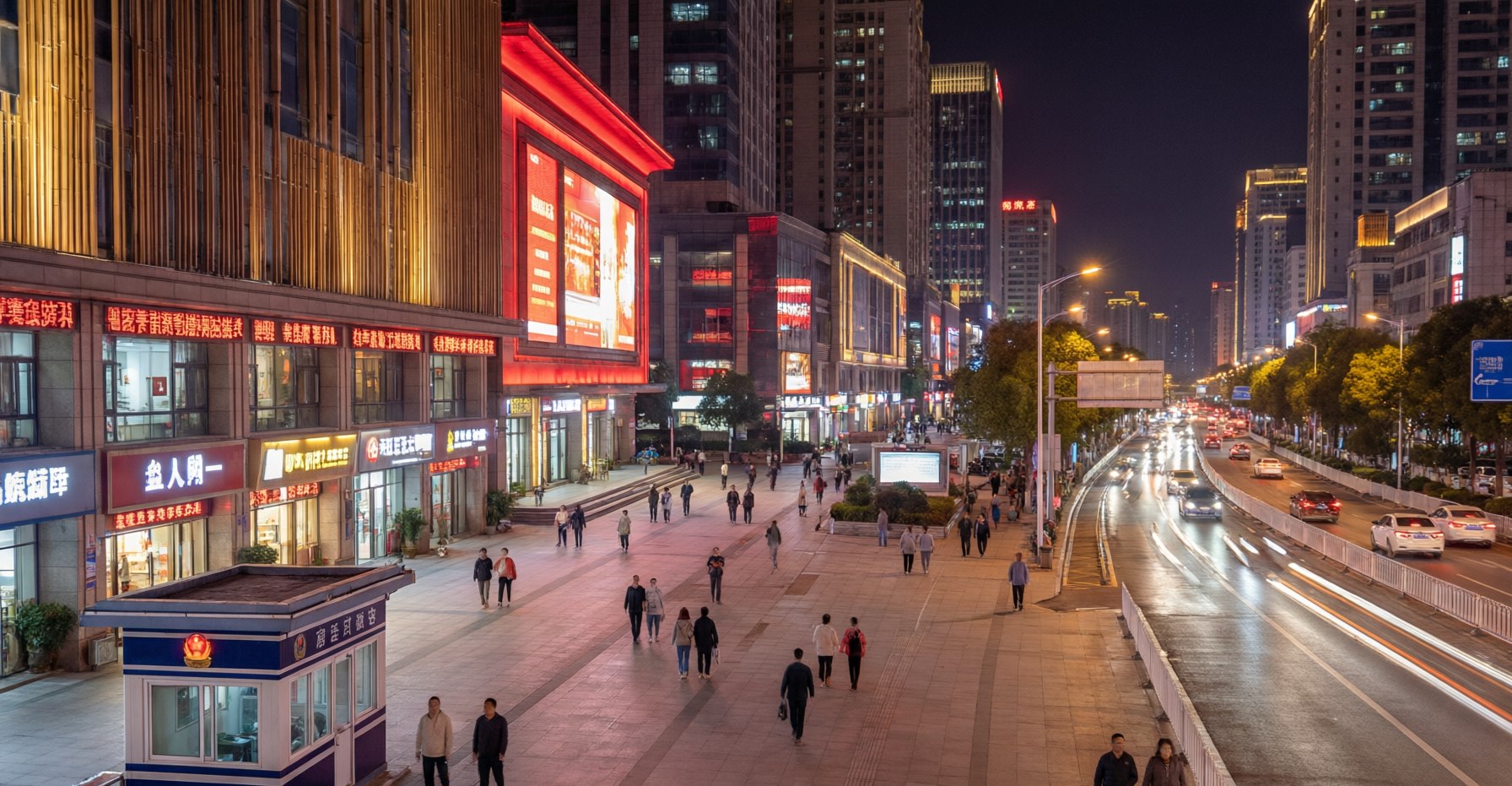
Ask almost anyone who has lived in China for more than a few months what surprised them most, and the answer comes back with striking consistency: how safe it felt. Not "safe for a big country" or "safe once you learn the ropes," but safe in a way that quietly rewires your instincts. The low-level vigilance many travelers carry as background noise in other destinations — the hand on the bag, the scan of the crowd, the reluctance to walk home late — simply fades. China is, by the lived experience of long-term residents and repeat visitors alike, extraordinarily safe.
That does not mean nothing can go wrong. The risks you actually face here are almost entirely financial rather than physical, and they cluster around tourist sites where a handful of well-rehearsed scams target newcomers. Understand those, know the three emergency numbers, and you'll have covered virtually everything that matters. This guide gives you the good news, the fine print, and the practical steps to handle the rare moment when something does go sideways.
The Good News: A Level of Safety That Feels Unusual
Violent crime against foreigners in China is vanishingly rare. Street harassment, pickpocketing, and muggings — the everyday hazards that shape how people move through many of the world's great cities — are essentially non-issues here. You can walk alone at 2 AM through any major Chinese city, phone in hand, earbuds in, without a second thought, and this is exactly what locals do. Women traveling solo report the same ease. The night markets stay crowded and bright well past midnight, and the streets feel genuinely, calmly occupied rather than merely tolerated.
It is worth being honest about why. This safety is enabled by a pervasive surveillance infrastructure — cameras are everywhere, and identification systems are deeply integrated into daily life. That reality raises legitimate and serious privacy concerns, and reasonable people disagree about the trade-offs. But from a pure personal-safety standpoint, the effect is undeniable: you can relax in a way that is unusual for international travel. Set aside the politics for the duration of your trip and simply enjoy the freedom of moving through a city without fear.
The Fine Print: Scams to Watch For
The handful of risks that do target travelers are financial, not physical, and they follow a recognizable script. They concentrate near major tourist sites in Beijing and Shanghai — the areas around the Forbidden City, Wangfujing, Tiananmen, the Bund, and Nanjing Road. Knowing the patterns is most of the defense.
The tea house scam. A friendly, often well-dressed local (sometimes a pair, sometimes a young woman) strikes up a conversation in excellent English, expresses fascination with your home country, and invites you to experience an "authentic" tea ceremony nearby. The setting is pleasant, the tea is real, and then the bill arrives: 1,000 to 5,000 RMB for a pot of leaves, with firm pressure to pay immediately, sometimes with intimidating associates appearing at the door. You are not in danger of violence, but you are in a designed-to-extract-money situation.
The art student scam. A variation on the same theme. Someone approaches claiming to be an art student, invites you to a gallery or exhibition to "practice English" or see their work, and the visit ends the same way — with a wildly overpriced bill for artwork or a "private showing" and pressure to settle up on the spot.
Fake taxis. At airports and major train stations, unmarked cars and drivers hovering near the exits will quote absurd flat fares — several hundred RMB for a ride that should cost a fraction of that. These are not licensed taxis. The fix is simple: ignore anyone who approaches you offering a ride, follow the signs to the official taxi queue (look for 出租车), or open DiDi and use the designated pickup zone.
The one rule that defeats all of them: if a stranger approaches you with an unsolicited invitation near a tourist site — a tea ceremony, a gallery, a "special" restaurant, a great deal — politely decline and walk away. Genuine friendliness exists in China, but it almost never arrives as a pitch in a tourist zone. A warm smile and a firm "no thank you" costs nothing and ends the encounter instantly.
Emergencies: Who to Call and What to Expect
China's emergency numbers work from any phone, including a locked one, and they are easy to remember. Police is 110, ambulance is 120, and fire is 119. In major cities, police response is fast, and you will often find police service kiosks (警务站) and visible patrols in busy areas. English may be limited on the line, so if you can, have a Chinese speaker help, or state your location slowly and clearly.
For anything that is not a true emergency — a lost item, a dispute with a vendor, a misunderstanding — the fastest problem-solver is usually your hotel front desk. Staff are accustomed to helping foreign guests navigate exactly these situations, they speak the language, and they can make calls and apply local pressure far more effectively than you can alone. Use them.
Hospitals and Medical Care
Hospitals in tier-1 cities operate international departments — often called VIP wards — staffed with English-speaking doctors and coordinators accustomed to treating foreign patients. In Beijing, Peking Union Medical College Hospital and United Family are well-known options; in Shanghai, look to the international wing of Huashan Hospital or Parkway Health. These facilities feel closer to a private Western clinic than to a typical public hospital ward.
Bring your passport, and expect to pay upfront at the time of treatment, then seek reimbursement from your travel insurance later. A standard consultation at an international clinic runs roughly 800 to 1,500 RMB, before tests or procedures. Keep every receipt and any written diagnosis — your insurer will want them. None of this is a reason to worry; it is simply the logistics of being treated well as a foreigner.
Traffic and Crossing the Street
Here is the one place where genuine physical caution is warranted, and it has nothing to do with crime. Chinese traffic can be chaotic, and the rules of the road are treated more as suggestions than commandments. Cars, e-bikes, scooters, and delivery riders all share the same space, and e-bikes in particular are near-silent and appear from every direction, including — disconcertingly — the wrong way down a bike lane or up onto the sidewalk.
A green pedestrian signal does not guarantee that turning vehicles will stop for you; many will turn across your path regardless. The local skill is to cross deliberately and predictably: make eye contact, move at a steady pace, and let drivers flow around you rather than darting or freezing. Watch especially for silent e-bikes when stepping off any curb. This is the single most common source of minor injury for unwary visitors, and a few minutes of observation will teach you the rhythm.
Keeping Your Belongings and Documents Safe
Because violent theft is so rare, the main threat to your possessions is not a mugger but simple misplacement. Crowded metros, busy markets, and the bustle of tourist sites are where phones and wallets go missing — usually slipped into a pocket or left on a counter, occasionally lifted by the rare opportunist. A front pocket or a zipped bag worn in front is plenty of protection in normal circumstances; you do not need to be paranoid, just tidy.
The document that matters most is your passport. You need the physical book to board trains, check into hotels, and occasionally pass security checks during sensitive periods — a photo on your phone is not a substitute. Keep it in a secure pocket or a money belt, and store a color photocopy or phone photo separately as a backup for casual ID situations. If it is ever lost or stolen, report it to the police (110) immediately to obtain a report, then contact your embassy or consulate; the police report is essential for getting a replacement and for any insurance claim.
The bottom line is reassuring. Treat China the way you would any destination — keep an eye on your things, decline unsolicited pitches near tourist sites, and know your emergency numbers — and the overwhelming likelihood is that the only thing you'll lose on your trip is your preconception that a city this big and this busy could feel this calm.