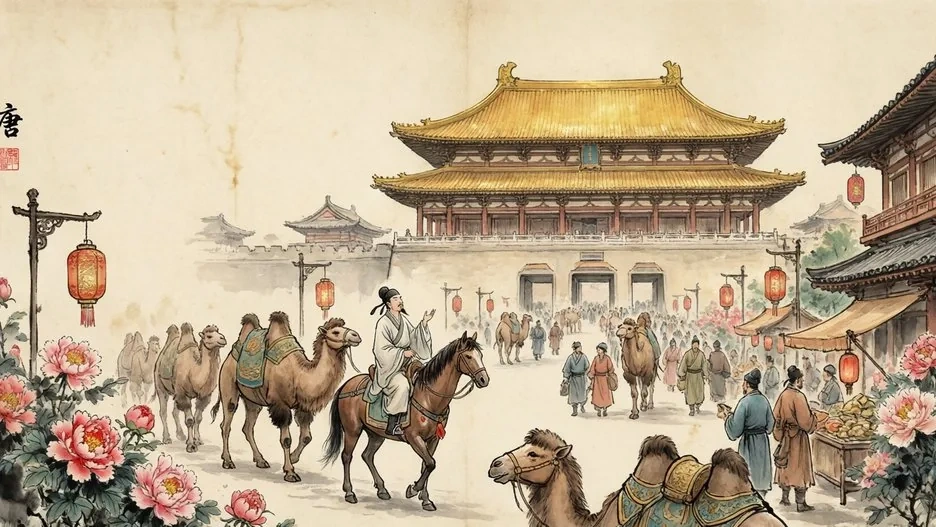
Short answer: allow two days in Xi'an. Prioritize Daming Palace for imperial scale, Giant Wild Goose Pagoda for Xuanzang and Buddhism, and Shaanxi History Museum for original objects. Add Huaqing Palace for the Xuanzong–Yang Guifei story, or travel to Longmen Grottoes in Luoyang for monumental Tang sculpture.
Choose the Right Tang Site
| Site | City | See it for | Allow | Planning note |
|---|---|---|---|---|
| Daming Palace | Xi'an | Imperial and urban scale | 2–3 hours | Large archaeological park; expect walking and exposed ruins |
| Giant Wild Goose Pagoda | Xi'an | Xuanzang and Tang Buddhism | 1.5–2 hours | Temple and tower access may use separate tickets |
| Shaanxi History Museum | Xi'an | Original Tang objects | 2–3 hours | Advance timed reservation is essential |
| Huaqing Palace | Xi'an, Lintong | Xuanzong, Yang Guifei and palace baths | 2–3 hours | Combine with Lintong; performances require separate planning |
| Longmen Grottoes | Luoyang | Rock-cut Buddhist sculpture | 3–4 hours | Not in Xi'an; allow a Luoyang day or overnight stay |
What You Will Actually See
Daming Palace National Heritage Park
Daming Palace became the Tang court's principal political center. Today, the value lies in the plan of the vanished complex: gates, foundations, the Hanyuan Hall platform, Taiye Pond and museums help visitors read how ceremony and administration occupied an immense northern extension of Chang'an.
Set expectations: this is an archaeological landscape, not a preserved Forbidden City. Bring sun or rain protection and use the site interpretation to reconstruct the palace mentally.
Giant and Small Wild Goose Pagodas
The Giant Wild Goose Pagoda was first completed in 652 at Da Ci'en Temple to house Buddhist texts and images associated with Xuanzang's journey to India. It is one of the clearest architectural links between Tang Chang'an, Buddhist translation and long-distance exchange.
The Small Wild Goose Pagoda, begun in the early eighth century at Jianfu Temple, offers a quieter complement and can be combined with Xi'an Museum. Both pagodas have Tang origins, but earthquakes, restorations and later rebuilding shaped what visitors see today.
Shaanxi History Museum
This is where the cosmopolitan Tang becomes tangible: sancai ceramics, tomb figurines, gold and silver vessels, imported forms and murals reveal clothing, music, animals, household objects and elite ritual more precisely than a modern historical show.
Booking matters: the museum's official English visitor page says timed reservations are released in limited numbers and the main venue normally closes on Mondays except national holidays. Secure this booking before arranging the rest of the day.
Huaqing Palace
Huaqing Palace connects a genuine imperial hot-spring setting and excavated bathing pools with the much-retold romance of Emperor Xuanzong and Yang Guifei. It also carries later history, especially the Xi'an Incident of 1936, so this is a layered site rather than a purely Tang monument.
Much of the visible architecture and performance environment is reconstructed or modern. Visit for the setting, excavated bath remains and cultural memory; treat the Song of Everlasting Sorrow show as theater inspired by Bai Juyi, not documentary history.
Longmen Grottoes
Longmen began before the Tang, but its seventh- and eighth-century carving reached an extraordinary scale. Fengxian Temple's monumental Vairocana ensemble is the essential stop for understanding the relationship among imperial patronage, Luoyang and mature Tang Buddhist sculpture.
Luoyang Longmen railway station is close to the grottoes, but the site itself is extensive. Allow several hours for the West Hill caves, river crossing and return view; an overnight stay avoids turning the visit into a rushed transport connection.
A Practical Two- or Three-Day Tang Route
- Day 1 · Imperial Chang'anDaming Palace → Shaanxi History Museum
Use the palace site to understand the city's scale, then let original objects supply the color and detail. Reverse the order if your museum reservation requires it.
- Day 2 · Buddhism and the citySmall Wild Goose Pagoda → Giant Wild Goose Pagoda
Compare two Tang foundations and include Xi'an Museum. The evening can end around the modern pedestrian and performance district south of the Giant Wild Goose Pagoda.
- Day 3 · Choose one extensionHuaqing Palace or Longmen Grottoes
Choose Huaqing for Xuanzong and Yang Guifei, especially if Lintong is already in your route. Choose Luoyang for the strongest surviving monumental Tang art.
Historic Site, Reconstruction or Tang-Inspired Attraction?
Daming Palace
Original buried and exposed remains interpreted through museums, platforms and selected reconstructions.
Wild Goose Pagodas
Historic Tang foundations and identities, with later repairs and architectural alteration.
Shaanxi History Museum
Authentic excavated objects; individual displays can rotate or require separate admission.
Tang Paradise & Great Tang Mall
Modern Tang-inspired architecture, lighting, retail and performance—not surviving Tang streets or palaces.
A useful correction: Xi'an City Wall is one of the city's great monuments, but the structure visitors walk today is principally Ming dynasty, not Tang. Include it for Xi'an history, not as physical evidence of Tang Chang'an.
Tang Dynasty Travel Questions
- What is the best Tang dynasty site in Xi'an?
- Daming Palace for imperial scale, Giant Wild Goose Pagoda for Buddhism, or Shaanxi History Museum for artifacts. A strong first visit combines all three.
- Are the Tang buildings original?
- Only in part. Daming Palace is mainly an archaeological site; the two Wild Goose Pagodas have Tang origins but later repairs. Many other Tang-style attractions are modern.
- How many days do I need?
- Allow two days for the main Xi'an sites. Add a third for Huaqing Palace or stay overnight in Luoyang for Longmen.
- Is Longmen Grottoes in Xi'an?
- No. It is in Luoyang, Henan, the Tang eastern capital. It belongs here because its great seventh- and eighth-century carvings are central to Tang art.
- Do I need advance reservations?
- Reserve Shaanxi History Museum first. Ticket and reservation systems at other sites can change; always verify through the official pages below.
Read the History Behind the Sites
Official visitor sources
Opening hours, ticket prices, tower access and reservation channels can change. These sources were checked on August 23, 2026; verify them again shortly before travel.
- Xi'an Municipal Government: Daming Palace National Heritage Park
- Xi'an Municipal Government: Giant Wild Goose Pagoda
- Shaanxi History Museum: official visiting and booking information
- Shaanxi Provincial Government: Small Wild Goose Pagoda
- Xi'an Municipal Government: Huaqing Palace
- Longmen Grottoes: official hours, tickets and transport
- UNESCO: Silk Roads, Chang'an–Tianshan Corridor
- UNESCO: Longmen Grottoes