Song Ci 宋词

If Tang poetry is marble, Song ci is silk. Born as song lyrics for banquet musicians, the ci grew into the most intimate instrument of Chinese verse — long lines and short, tuned to a melody, voiced for one listener at a time. Moonlight and lanterns, falling petals and returning swallows: the four ci gathered here are the form at its highest, each with its original, its meaning, and its world.

The ci (词) began as entertainment — words fitted to popular song tunes in the taverns and banquets of the late Tang and Five Dynasties — and ended as one of the highest forms of Chinese literature. Where the shi poem spoke in public, the ci spoke in private: its uneven line lengths follow the breath of a melody, and its traditional subjects — longing, parting, the turn of seasons — made it the instrument of everything too intimate for the official forms.

By the Song dynasty the ci had its own masters and its own two schools: the Graceful (wanyue, 婉约), delicate and suggestive, and the Bold (haofang, 豪放), expansive and thundering. The four lyrics gathered here cross both schools and both sexes of genius — a chancellor, an exile, a soldier, and the greatest woman writer in the tradition.

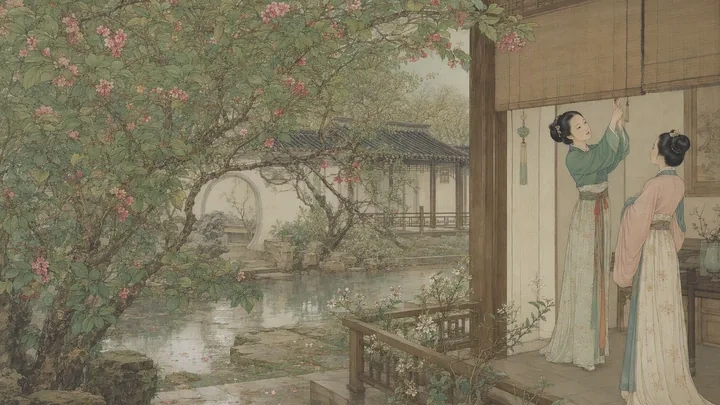
A Song dynasty garden after night rain with lush green leaves, fading red crabapple blossoms, and a noblewoman speaking with her maid at a rolled-up curtain

如梦令 (Like a Dream) — Li Qingzhao

Thirty-three characters. A night of rain and wind, a deep sleep that failed to sleep off the wine, one question asked of the maid rolling up the blinds, one wrong answer, one correction. Li Qingzhao's Like a Dream

c. 1100 CE · 李清照 Song Ci
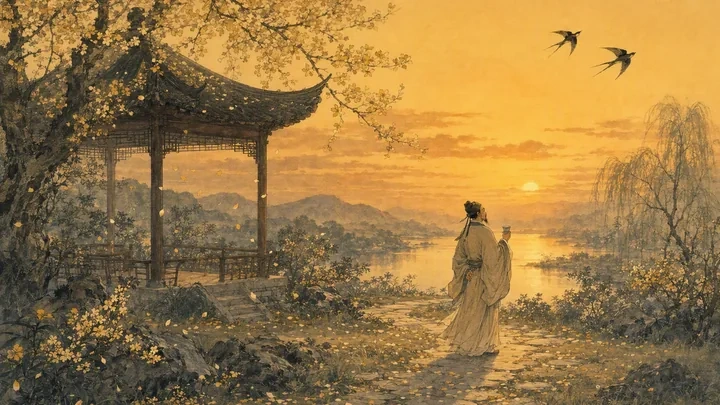
A small garden pavilion at dusk with falling petals on a winding stone path, swallows returning under an amber sky, and a solitary poet with wine

浣溪沙 (Silk-Washing Stream) — Yan Shu

Yan Shu was the Song dynasty's model of the poet-statesman: a child prodigy who entered court at fourteen, a chancellor who governed calmly, a patron who employed half the literary talent of his generation, and a man who…

c. 1038 CE · 晏殊 Song Ci
FAQ · Frequently Asked Questions
What is a ci poem exactly?
The ci began as lyrics fitted to popular song tunes in the taverns and banquets of the late Tang and Five Dynasties. Its uneven lines follow a melody, making it the most intimate form of Chinese verse, voiced for one listener at a time.
What are the two schools of Song ci?
The Graceful school (wanyue), delicate and suggestive, and the Bold school (haofang), expansive and thundering. The four ci gathered in this section cross both schools.
Which Song ci poems are featured on this page?
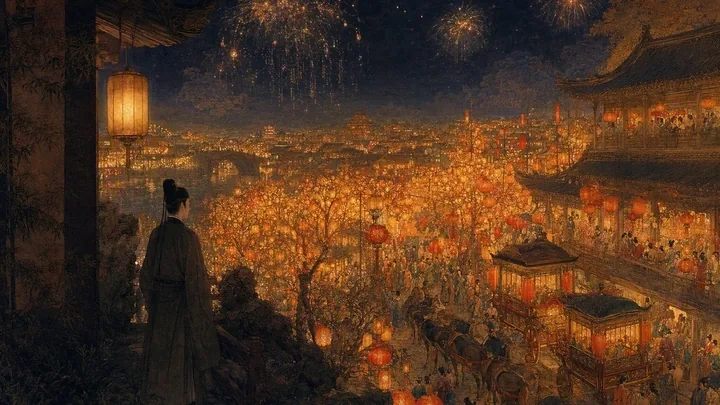
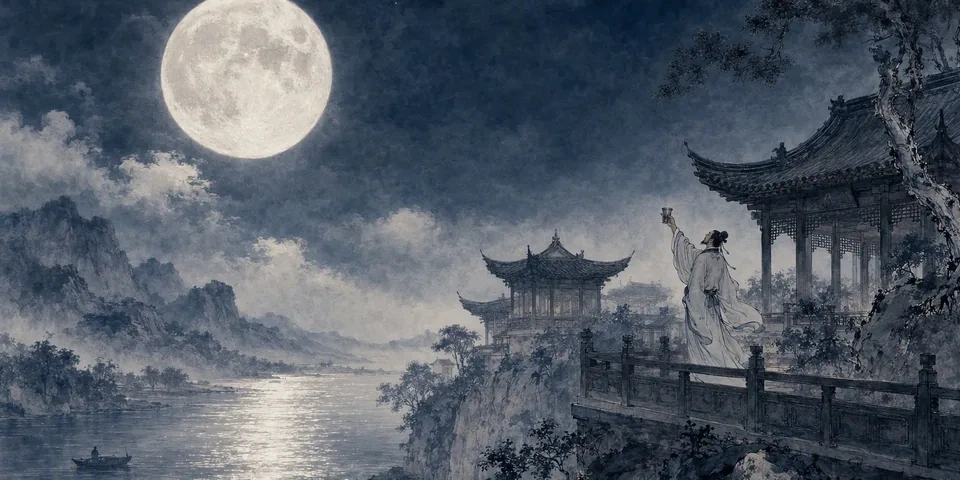
Su Shi's Water Melody for Mid-Autumn, Li Qingzhao's Like a Dream, Xin Qiji's Green Jade Cup on the Lantern Festival, and Yan Shu's Silk-Washing Stream, each presented with its original text, its meaning, and its world.
How is ci different from Tang shi poetry?
The shi spoke in public, the ci in private. Its uneven line lengths follow the breath of a melody, and its subjects of longing, parting, and the turn of seasons made it the instrument of everything too intimate for the official forms.